
Varanasi Silk Saree Shopping Guide for Tourists: Complete Market Map + Silk Khazana Location
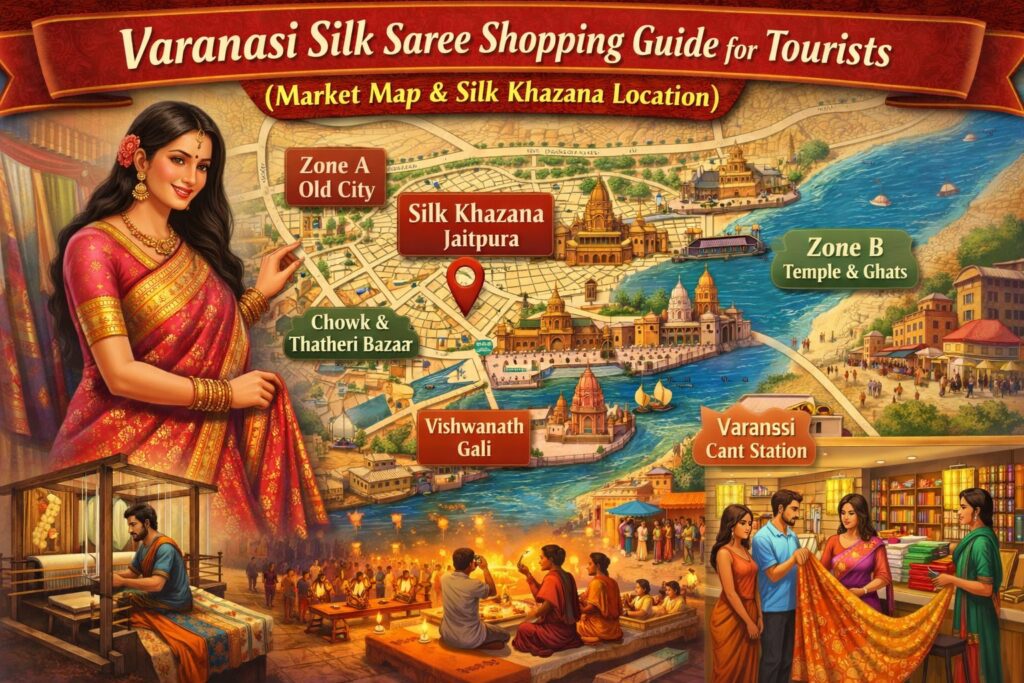
Introduction to Varanasi Silk Sarees
Have you ever wrapped yourself in a piece of history? That’s exactly what happens when you drape a Banarasi silk saree around you. Varanasi, the spiritual heart of India, isn’t just about ghats and temples. It’s a treasure trove for silk lovers, where every saree tells a story woven with golden threads and centuries-old craftsmanship.
Shopping for pure silk sarees in Varanasi can feel overwhelming for first-time visitors. The narrow lanes, bustling markets, and countless shops might leave you wondering where to start. But don’t worry! Today I will guide you everything you need to know about shopping for authentic Banarasi silk sarees, including detailed market maps and the exact location of Silk Khazana, one of the most trusted pure authentic silk saree shop in Varanasi.
Why Varanasi is the Silk Capital of India
The Heritage of Banarasi Silk
Varanasi has been synonymous with silk weaving for over 2,000 years. The tradition is believed to have flourished during the Mughal era when Persian motifs merged with Indian artistry. Today, more than 120,000 people in Varanasi are directly or indirectly involved in the silk weaving industry. Can you imagine the dedication it takes to keep this ancient craft alive?
The weavers of Varanasi have passed down their skills through generations, creating intricate designs that take weeks or even months to complete. Each saree is a masterpiece, with patterns inspired by Mughal architecture, nature, and spiritual symbols.
What Makes Banarasi Sarees Special?
What sets a Banarasi saree apart from other silk sarees? It’s the combination of fine silk, intricate brocade work, and the use of gold or silver zari (metallic thread). The designs are so detailed that you’ll find yourself discovering new patterns every time you look at the fabric. Traditional motifs include flowers, leaves, peacocks, and the famous “kalga” and “bel” patterns.
The weight of a genuine Banarasi saree speaks volumes about its quality. These aren’t your lightweight everyday sarees; they’re substantial pieces that drape beautifully and make a statement.
Understanding Varanasi Silk Saree Markets
Main Shopping Areas in Varanasi
Varanasi’s silk market isn’t concentrated in one place. Instead, it’s spread across several key areas, each with its own character and specialties. The main shopping zones include Chowk, Godowlia, Vishwanath Gali, and Lahurabir. These areas are interconnected through narrow lanes that have remained unchanged for centuries.
Think of these markets as a living museum where business happens the way it did hundreds of years ago. Shop owners sit cross-legged, unfurling saree after saree, sharing stories about each piece’s creation.
Peak Shopping Seasons
While you can shop for silk sarees year-round, certain times are particularly advantageous. The festival season (September to November) and wedding season (November to February) bring fresh stock and more variety. However, these periods also mean higher prices and more crowds.
The summer months (March to June) might be hot, but you’ll find better deals and more personalized attention from shopkeepers. Post-wedding season (March to April) is also excellent for bargain hunters.
Complete Market Map for Silk Saree Shopping
Chowk Area and Thatheri Bazaar
Chowk is the oldest and most authentic silk market in Varanasi. Located in the heart of the old city, this area is where wholesale dealers and established retailers operate. Thatheri Bazaar, within Chowk, is famous for its concentration of silk shops.
To reach Chowk, you can take an auto-rickshaw to “Chowk Crossing” from anywhere in Varanasi. The area is pedestrian-friendly once you enter, though the lanes are narrow. Shops here open around 10 AM and close by 9 PM.
Godowlia Market
Godowlia is more tourist-friendly compared to Chowk and offers a good mix of quality and accessibility. Located near the Dashashwamedh Ghat, this market is easier to navigate and has shops that cater specifically to tourists with clear pricing and silk mark certifications.
The advantage of shopping here is the proximity to other tourist attractions. You can combine your shopping expedition with a visit to the ghats or the Kashi Vishwanath Temple.
Vishwanath Gali
This narrow lane leading to the Kashi Vishwanath Temple is lined with silk shops on both sides. While primarily a spiritual route, it’s transformed into a shopping corridor where you’ll find everything from budget options to premium pieces.
The atmosphere here is unique—the scent of incense mingles with the rustle of silk, and temple bells provide a constant backdrop to your shopping experience. Just be prepared for crowds, especially during peak pilgrimage times.
Lahurabir
Lahurabir is where many weavers live and work. Visiting this area gives you an authentic behind-the-scenes look at how Banarasi sarees are created. Several weaver cooperatives operate here, allowing you to buy directly from artisans.
The prices in Lahurabir tend to be more reasonable since you’re cutting out middlemen. However, the area requires some navigation skills and preferably a local guide or auto-rickshaw driver who knows the location.
Silk Khazana: Your Ultimate Shopping Destination
Location and How to Reach Silk Khazana
Silk Khazana is located in the Jaitpura area of Varanasi, at J, 14/180, opp. Chhavi Mahal Cinema, Qazi Sadullah Pura, Jaitpura, Varanasi, Uttar Pradesh 221001.
This establishment has built a reputation for authentic, high-quality Pure Banarasi silk sarees and excellent customer service.
To reach Silk Khazana from Varanasi Junction Railway Station, take an auto-rickshaw and tell the driver “Jaitpure, Silk Khazana in front of Chhavi Mahal Cinema.” The journey takes approximately 10-20 minutes depending on traffic. From the airport, it’s about a 30-35 minute drive. Most local auto-rickshaw drivers are familiar with the location.
What to Expect at Silk Khazana
Unlike cramped traditional shops, Silk Khazana offers a spacious, air-conditioned showroom where you can browse comfortably. The staff is knowledgeable about different types of silk, weaving techniques, and can explain the history behind various designs.
What makes Silk Khazana stand out is their transparent pricing policy and willingness to educate customers about silk quality. They don’t pressure you into buying and are happy to show you multiple pieces until you find exactly what you’re looking for.
Product Range and Pricing
Silk Khazana stocks an extensive range of Banarasi sarees, from traditional red and gold bridal pieces to contemporary pastel designs. Their collection includes pure katan silk, organza, georgette, and tissue varieties.
Prices typically range from ₹5,000 for simpler designs to ₹150,000 for elaborate bridal pieces with heavy zari work. They also offer customization services if you want a specific color combination or design modification.
Types of Banarasi Silk Sarees Available
Pure Silk (Katan)
Pure Katan silk is the most traditional and sought-after variety. Made from pure silk threads twisted together, these sarees have a natural sheen and substantial weight. The fabric is durable and becomes more beautiful with age. Katan sarees are perfect for weddings and special occasions.
Organza (Kora)
Pure Organza Banarasi sarees are lighter and slightly translucent. They’re created using twisted silk threads, resulting in a crisp texture that holds its shape well. These sarees are ideal for summer weddings and events where you want elegance without excessive weight.
Georgette
Pure Georgette Banarasi sarees combine the traditional zari work of Varanasi with the flowing drape of georgette fabric. They’re comfortable, easy to manage, and perfect for women who want the Banarasi look without the weight of pure silk.
Shattir
Pure Shattir is a contemporary weave that mixes cotton warp with silk weft, creating a unique texture. These sarees are more affordable than pure silk options while still featuring beautiful Banarasi designs. They’re breathable and suitable for day events.
How to Identify Genuine Pure Banarasi Silk
The Burn Test
Here’s a simple test you can request: Ask the shopkeeper to burn a small thread from the saree. Pure silk burns slowly, smells like burning hair, and turns to ash that crumbles easily. Synthetic materials melt, smell like plastic, and form hard beads.
Checking the Zari Work
Genuine zari contains real silver coated with gold. To check, look at the back of the saree—authentic zari should be clearly visible on both sides. Additionally, real zari doesn’t tarnish easily and maintains its shine over years.
Rub the zari gently between your fingers. Genuine metallic thread feels slightly rough and doesn’t leave color on your hands. Imitation zari is usually made from plastic-coated copper and may feel smoother or leave a slight residue.
Silk Mark Certification
The Silk Mark is a certification provided by the Silk Mark Organisation of India. Look for a small fabric tag attached to genuine silk products. This certification guarantees that the product contains at least 95% pure silk. However, remember that many authentic weavers, especially small-scale artisans, might not have this certification despite producing genuine products.
Price Ranges and Bargaining Tips
These are ballpark ranges to help you avoid unrealistic expectations:
- Entry-level art silk / blended sarees: ₹1,500 – ₹3,000
- Mid-range Banarasi (mix of silk, some handloom, some powerloom): ₹4,000 – ₹10,000
- Good handloom pure silk Banarasi: usually ₹10,000+, going up based on work, zari content and design complexity.
- Entry-level art silk / blended sarees: ₹1,500 – ₹3,000
- Bridal / heirloom pieces (heavy kadwa, mina, jangla, jamdani): can easily go to ₹30,000 – ₹1,00,000+.
Always ask the shop to clearly write “pure silk, handloom, zari type” on the bill for future reference.
Practical Shopping Tips for Tourists
- Timing:
- Most saree markets open around 10:00–11:00 AM and run till 9:00–10:00 PM.
- Most saree markets open around 10:00–11:00 AM and run till 9:00–10:00 PM.
- Bargaining:
- In small shops and gali markets, bargaining is normal.
- In branded showrooms or fixed-price stores, discounts are more limited.
- In small shops and gali markets, bargaining is normal.
- Touts & “Government shop” claims:
- Around ghats/temples, auto-drivers and agents may push “government” or “fixed price” shops for commission.
- It is better to go with pre-researched names and locations rather than following random suggestions.
- Around ghats/temples, auto-drivers and agents may push “government” or “fixed price” shops for commission.
- Payment & invoicing:
- Most established shops accept cards and UPI.
- If you are an international tourist, clarify whether they accept international cards and ask for a detailed invoice for customs.
- Most established shops accept cards and UPI.
- Shipping:
- Many shops can ship sarees abroad.
- Confirm courier partner, tracking options, and packing quality.
- Many shops can ship sarees abroad.
Best Time to Visit Varanasi for Saree Shopping
The best time to visit Varanasi for saree shopping is between October and March when the weather is pleasant. Diwali (October/November) brings fresh stock and special designs, making it an excellent time for variety seekers.
If you want to avoid crowds and get better prices, consider visiting during the off-season months of July, August, or April. Shopkeepers are generally more willing to negotiate during quieter periods. Additionally, you’ll receive more personalized attention and have time to examine products carefully without feeling rushed.
Essential Shopping Tips for Tourists
Dress Comfortably
Wear comfortable shoes because you’ll be walking through narrow lanes and climbing stairs to showrooms. The old city markets aren’t air-conditioned, so dress in breathable fabrics. Carry a small backpack or crossbody bag to keep your hands free while examining sarees.
Carry Cash
While larger establishments like Silk Khazana accept cards and digital payments, many smaller shops still operate on cash. ATMs are available in Godowlia and other major areas, but it’s wise to withdraw money before heading into the narrow lanes of Chowk or Lahurabir.
Be Patient
Shopping for Banarasi sarees isn’t a quick errand. Shopkeepers will show you numerous options, often serving you tea while you browse. Embrace this slow, relationship-based shopping culture. The process is as much about building trust as it is about the transaction.
Don’t rush your decision. A good quality Banarasi saree is an investment. Take your time examining the weave, checking the zari, and ensuring you genuinely love the piece before making a purchase.
Transportation and Accessibility
The narrow lanes of Varanasi’s silk markets aren’t accessible by car or large vehicles. Plan to take an auto-rickshaw to the main entry points and then walk into the markets. For Chowk, ask your driver to drop you at Chowk Crossing. For Godowlia, the main market entrance is near Godowlia Chowk.
If you’re carrying purchased sarees, most shops will pack them securely. However, arrange transportation back to your hotel in advance, especially if you’re shopping in the evening when finding autos becomes challenging.
Many hotels can arrange guided shopping tours with trusted drivers who know the best shops and won’t take you to commission-based establishments. This option works well for first-time visitors who feel overwhelmed by navigating the markets independently.
Additional Shopping Experiences in Varanasi
While silk sarees are the star attraction, don’t miss other Varanasi specialties. The markets also offer beautiful silk stoles, scarves, dress materials, and dupattas. Men can find silk kurtas and fabric for tailoring.
Brocade work extends beyond sarees to home furnishings. Look for cushion covers, table runners, and bedspreads featuring traditional Banarasi designs. These make excellent gifts and are easier to pack than sarees.
Several shops also stock fabric by the meter if you want to create custom outfits. This option works well if you have a specific design in mind or want to coordinate multiple pieces in the same fabric.
Conclusion
Shopping for Banarasi silk sarees in Varanasi is more than a transaction—it’s a cultural experience that connects you with centuries of artistic tradition. Whether you’re exploring the atmospheric lanes of Chowk, browsing the tourist-friendly shops in Godowlia, or visiting the professional setup at Silk Khazana in Lahurabir, each location offers its own unique charm.
Remember to take your time, ask questions, and don’t hesitate to negotiate respectfully. A genuine Banarasi silk saree is worth the investment—it’s a piece of art you’ll cherish for years and perhaps pass down to future generations. With this complete market map and shopping guide, you’re now equipped to navigate Varanasi’s silk markets with confidence and bring home something truly special.
FAQs
- How can I differentiate between pure silk and artificial silk Banarasi sarees?
Pure silk feels cool to touch and has a natural sheen that changes in different lighting. Perform the burn test—pure silk burns like hair and crumbles to ash, while artificial silk melts like plastic. Additionally, check for the Silk Mark certification tag, and examine if the zari work appears on both sides of the fabric equally.
- What is a reasonable price for an authentic Banarasi silk saree?
Authentic Banarasi silk sarees start from around ₹5,000 for simpler designs and can go up to ₹200,000 or more for elaborate bridal pieces with heavy zari work. A good quality saree suitable for weddings typically costs between ₹15,000 and ₹50,000. Be suspicious of prices that seem too good to be true, as genuine silk weaving is labor-intensive and commands fair pricing.
- Is Silk Khazana better than shopping in traditional markets like Chowk?
Both options have advantages. Silk Khazana offers a comfortable, air-conditioned environment, transparent pricing, and a curated collection with guaranteed authenticity. Traditional markets like Chowk provide a more authentic cultural experience, wider variety, and often better bargaining opportunities. If you’re a first-time visitor or prefer convenience, start with Silk Khazana. For adventurous shoppers who enjoy bargaining, explore both.
- How long does it take to complete a silk saree shopping trip in Varanasi?
Plan for at least 3-4 hours if you’re visiting one or two shops and want to make a considered purchase. If you’re exploring multiple markets and comparing options extensively, allocate a full day. The process involves examining numerous sarees, understanding quality differences, bargaining, and often includes tea breaks and conversations with shopkeepers. Rushing diminishes the experience and may lead to hasty decisions.
- Can I get Banarasi sarees custom-made during my visit to Varanasi?
Yes, several shops including Silk Khazana offer customization services. However, custom-made sarees typically take 30-60 days to complete depending on design complexity. If you’re visiting Varanasi and want a custom piece, you’ll need to place your order with specific measurements and design preferences, then arrange for shipping to your location. Some shops require advance payment, while others may ask for a deposit with the balance due upon completion.